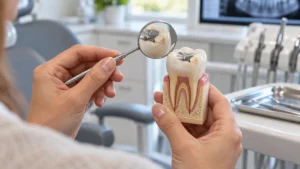
A sore spot behind your last molar can be hard to describe. Is the wisdom tooth infected, is the gum irritated, or is another tooth causing the pain? You cannot reliably answer that from a mirror alone. One common possibility is pericoronitis: inflammation of the gum around a wisdom tooth that has only partly emerged. A dentist can examine the area and decide whether another cause is involved.
What pericoronitis means
When a wisdom tooth is partly covered by gum, food and bacteria may collect around the flap of tissue. The NHS identifies gum infection around a wisdom tooth as pericoronitis and lists pain, swelling, and food trapping among problems that can occur with partially erupted teeth. This is different from assuming the tooth itself must be removed immediately.
Infected wisdom tooth symptoms people report include tenderness behind the last molar, swollen gum, an unpleasant taste, or difficulty chewing. Fever, feeling unwell, facial swelling, or trouble opening the mouth are more concerning. Similar symptoms can come from decay, a dental abscess, or another condition, so the location of pain does not establish a diagnosis.
When to contact a dentist
Call for a dental assessment if the area is painful, swollen, recurrently irritated, or hard to clean. Explain whether the tooth is partly visible, whether the gum has swollen before, and whether you have a bad taste or fever. A clinician may examine the area and use imaging to see the wisdom tooth’s position. Our wisdom tooth pain service page explains how to seek care in Houston.
If swelling affects breathing or swallowing, or you become seriously unwell, seek emergency medical care. Do not wait for a routine appointment. Worsening facial or neck swelling also deserves urgent evaluation.
What might treatment involve?
Treatment depends on the cause and severity. The dentist may clean the area, explain how to keep it clean, manage pain, and discuss whether the wisdom tooth needs monitoring or removal. Recurrent problems, decay, or a poorly positioned tooth may change the plan. Antibiotics are not an automatic answer for every painful wisdom tooth; clinical assessment determines whether they are appropriate.
Our existing article on how long pericoronitis may take to heal focuses on recovery. This guide focuses on recognizing the problem and deciding when to get it checked. If removal is advised, ask why it is recommended for your specific tooth and what the alternatives are.
Why the examination matters more than the label
Tell the dentist if the discomfort sits in the gum behind the last molar, feels like it comes from the tooth when you bite, or spreads toward the jaw. Also mention whether food repeatedly gets caught there, whether opening your mouth is harder, and whether this has happened before. None of these observations diagnoses pericoronitis by itself, but together they help the clinician decide what to examine.
A partly erupted wisdom tooth can be associated with an inflamed gum flap. A neighboring molar can also have decay or gum problems that feel as though they are coming from the wisdom tooth. Imaging may show the position of the back tooth, while the clinical exam shows what is happening in the surrounding tissue. That is why an online photo or symptom checklist cannot tell you whether extraction is needed.
If the area improves after a few days, note whether it fully resolves or returns. Repeated episodes are useful information for the dentist. Keep any follow-up appointment recommended by the clinician even if the pain has eased by then.
Questions to ask during the visit
- Is the pain coming from the gum around the wisdom tooth, the tooth itself, or a neighboring molar?
- Does the image show enough space for the wisdom tooth to emerge?
- What can I do safely while the area heals?
- If removal is recommended, what problem is it expected to prevent or solve?
Frequently asked questions
Does pericoronitis always mean the tooth must come out?
No. A dentist considers the pattern of symptoms, the tooth’s position, and whether the problem returns. One episode does not automatically mean extraction.
Can I wait for the swelling to go away?
Do not rely on swelling fading as proof that the cause has resolved. Arrange an assessment, especially if symptoms recur or worsen.
Can a wisdom tooth cause a bad taste?
It can be associated with trapped debris or infection, but a bad taste has several possible causes. Mention it to the dentist along with pain, swelling, and fever.
Need help with wisdom tooth pain in Houston?
If the pain or swelling is worsening, call a Houston office now or book online now for an emergency dental assessment. URBN Dental offers same-day care, welcomes walk-ins, and has Saturday availability. A dentist can examine the area and explain whether treatment, including extraction, is needed.
Sources: NHS: Wisdom Tooth Removal; NHS England: Urgent Dental Care Guidance.