When a tooth hurts and your face begins to swell, the question is not just “Where is open?” It is “Which place can assess this safely and treat the cause?” A dentist usually needs to diagnose and treat the tooth. Urgent care can assess some medical symptoms and may help when dental care is unavailable, but it generally cannot perform a root canal, drain a dental abscess, or restore a tooth. An emergency department is the right destination for symptoms that threaten breathing or indicate a serious spreading illness.
What a dentist can do
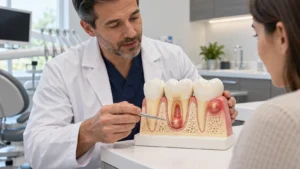
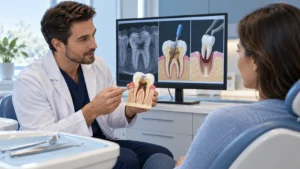
A dentist examines the tooth and gum, uses imaging when needed, identifies the likely source, and explains treatment. Depending on the diagnosis, care could involve a root canal, drainage, periodontal treatment, or extraction. The tooth infection treatment page describes the services to discuss with a Houston dental office. Call to confirm that the location can assess your symptoms and when it can see you.
What urgent care can and cannot do
An urgent care clinician may assess fever, pain, and swelling, and decide whether medication or referral is needed. Availability and scope vary by clinic. Urgent care usually does not have dental equipment or provide definitive tooth treatment. Even if symptoms ease after a visit, arrange a dentist appointment to address the source. ADA guidance recommends dental treatment rather than routine antibiotics for most pulpal and periapical pain and localized swelling in otherwise healthy adults.
If you are searching “urgent care tooth infection,” ask the clinic what it can actually assess. Do not assume a prescription will solve a dental abscess. Do not take leftover antibiotics without a clinician’s direction.
If you first visit urgent care, plan the dental follow-up
Ask the medical clinician what they found, whether they are concerned about spread of infection, and when you should seek dental care. Keep a record of any medicine prescribed and tell the dentist what you received. If the clinician says you need a dentist, try to arrange that visit promptly even if pain improves.
When calling the dental office, give a short handoff: “Urgent care saw me yesterday for swelling near a lower molar. I was told to see a dentist. The swelling is better, the same, or worse, and I have or do not have fever.” This helps the office triage the next appointment. It does not replace a diagnosis, but it is more useful than saying only “I need antibiotics.”
If symptoms worsen while you are waiting, reassess the situation. New trouble swallowing, breathing difficulty, rapidly increasing facial or neck swelling, or feeling seriously unwell calls for emergency medical care rather than waiting for the dental appointment.
When to go to an emergency department
Seek emergency medical care now if swelling makes it hard to breathe or swallow, you have rapidly spreading facial or neck swelling, or you feel seriously unwell. Serious facial injury or uncontrolled bleeding also needs emergency evaluation. Hospital care can manage the immediate medical threat; you may still need a dentist afterward to treat the tooth.
A simple decision guide
- Toothache, localized gum bump, or mild swelling: contact a dentist promptly and describe all symptoms.
- Dental office unavailable and you have worsening symptoms or fever: seek timely medical assessment; ask where you can receive definitive dental follow-up.
- Breathing or swallowing difficulty, major or rapidly spreading swelling, or serious illness: seek emergency medical care.
Our dental emergency page helps you identify dental concerns to report when you call. The purpose of this guide is to choose the right first setting, not to diagnose an infection online.
FAQ
Can urgent care prescribe antibiotics for a tooth infection?
A clinician may prescribe them when indicated, but antibiotics are not needed for every dental pain or swelling problem and do not replace dental treatment of the source.
Can the ER pull an infected tooth?
Hospital services differ. An emergency department can address serious medical complications, but definitive dental treatment may require a dentist or oral surgeon. Ask about follow-up before you leave.
What if the tooth stops hurting after it drains?
That does not mean the infection is gone. MedlinePlus notes that pain can ease when pressure is relieved while infection remains active.
Find the right next step in Houston
If you have tooth pain or localized swelling without the medical warning signs above, URBN Dental offers same-day emergency dental assessments in Houston. Root canals and extractions are available when clinically appropriate. Call an office now or book online now. For breathing or swallowing trouble, rapidly spreading swelling, or serious illness, use emergency medical care instead.
Sources: American Dental Association: Antibiotics for Dental Pain and Swelling; MedlinePlus: Tooth Abscess; NHS England: Urgent Dental Care Guidance.